
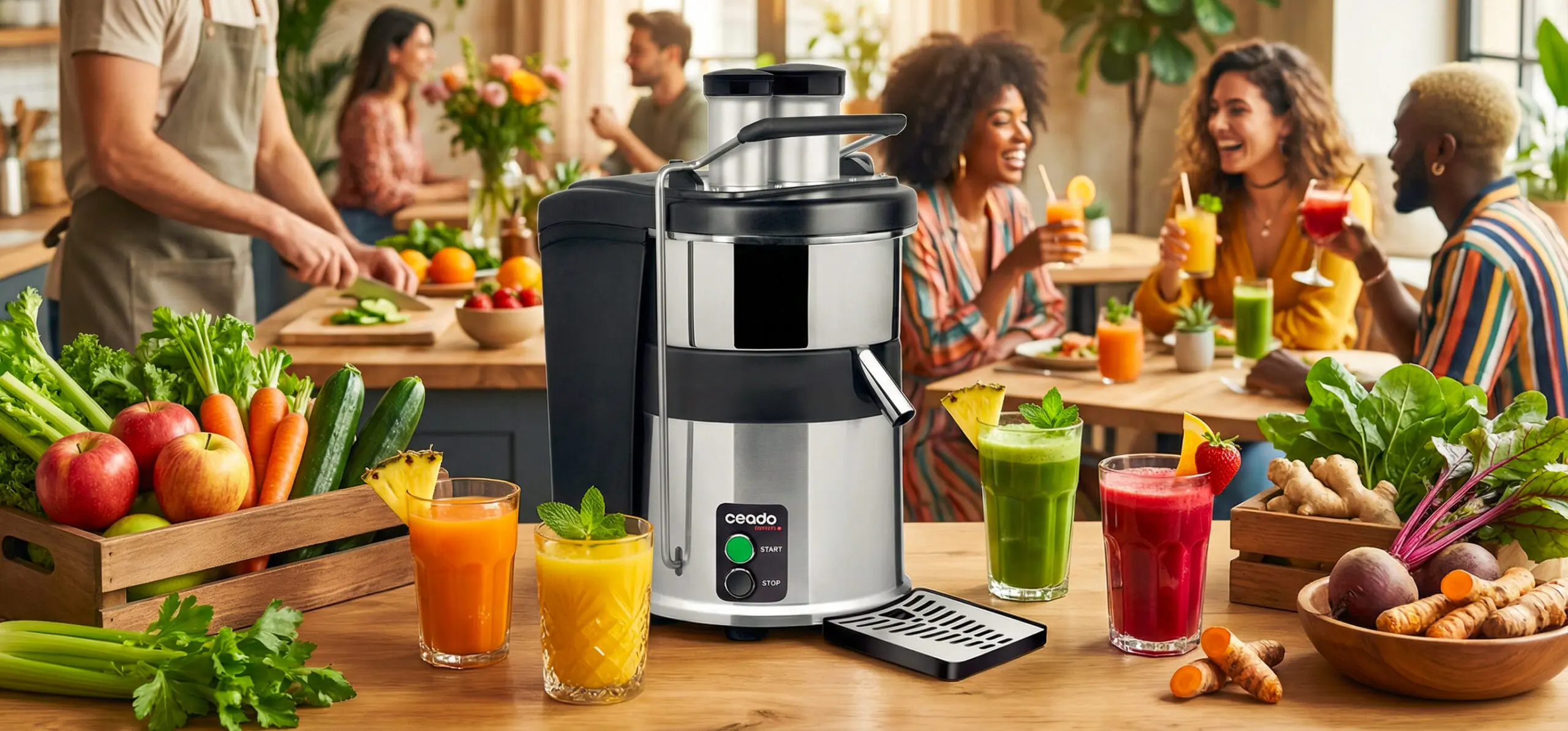
Guests scan the menu looking for something that feels clean, not just another sweet drink, and operators are trying to deliver that feeling without slowing service, adding labor, or bleeding margin. What restaurants want is simple but hard to execute at once: a drink that tastes unmistakably fresh, supports wellness-minded diners, and still moves with the pace of a busy shift. Something premium enough to build loyalty, consistent enough to protect your reputation, and efficient enough to run every day without becoming one more operational headache.
The shift guest made
Restaurants are getting squeezed from both sides: guests want “clean,” functional options that feel fresh and real, while operators are fighting for speed, consistency, and margin. A bottled juice in the cooler looks like an easy win until you realize what it signals to today’s health-minded diner: processed, older than it tastes, and not in your control. When guests are paying premium prices for “better-for-you,” they’re not just buying a beverage. They’re buying trust.
That’s why the conversation about healthy fresh juices matters. It’s not a trend headline. It’s a decision diners are making in real time: “Do I believe this place is as thoughtful as it claims?” If the answer feels like “maybe,” you don’t just lose a beverage. You lose the halo effect that drives repeat visits and word-of-mouth.
Why bottled juice quietly works against “fresh” positioning
 The hardest part is that juice is one of the most emotional “health” categories on the menu. Guests order it for immunity, energy, recovery, or because they’re trying to make one good choice in a day full of compromises. Bottled juice has disadvantages that are invisible until you know what’s happening: processing and storage can reduce heat-sensitive vitamins like vitamin C and some B vitamins, and exposure to light, oxygen, and time steadily degrades antioxidants and phytonutrients. Even when a bottled product is “100%,” it’s often still weeks or months removed from the moment it was fruit.
Restaurants feel that gap as complaints, lukewarm repeats, and the quiet question every operator dreads: Is this place really as good as it says it is?
Then there’s the sugar problem, the one that comes back as buyer’s remorse. Many bottled juices are optimized for sweetness and uniform flavor. Guests may not articulate “glycemic load,” but they feel the outcome: too sweet, heavy, not refreshing, not worth it. And when a guest walks out thinking, I should’ve just had water, you didn’t just lose a beverage sale, you lost an opportunity to be part of their daily routine.
The real operational enemy: time (and what it does to juice)
Freshness is a clock that starts the second juice meets air. Oxidation begins immediately, and quality can fade fast if you’re not serving it quickly and cold. Restaurants know the stress of anything time-sensitive, perishable, and visible. They worry about waste, training, consistency, and the messy details guests never see but always judge: taste drift, color changes, separation, and whether staff can deliver it the same way every time when labor is tight.
Add in the pressure to avoid additives, flavor packs, and “extra stuff” guests don’t want, and it can feel like you’re being asked to perform perfection in real time.
That’s the tension: guests are moving toward “made-to-order, never shelf-stored,” yet most restaurants are still leaning on products designed to survive long storage and repeatable distribution.
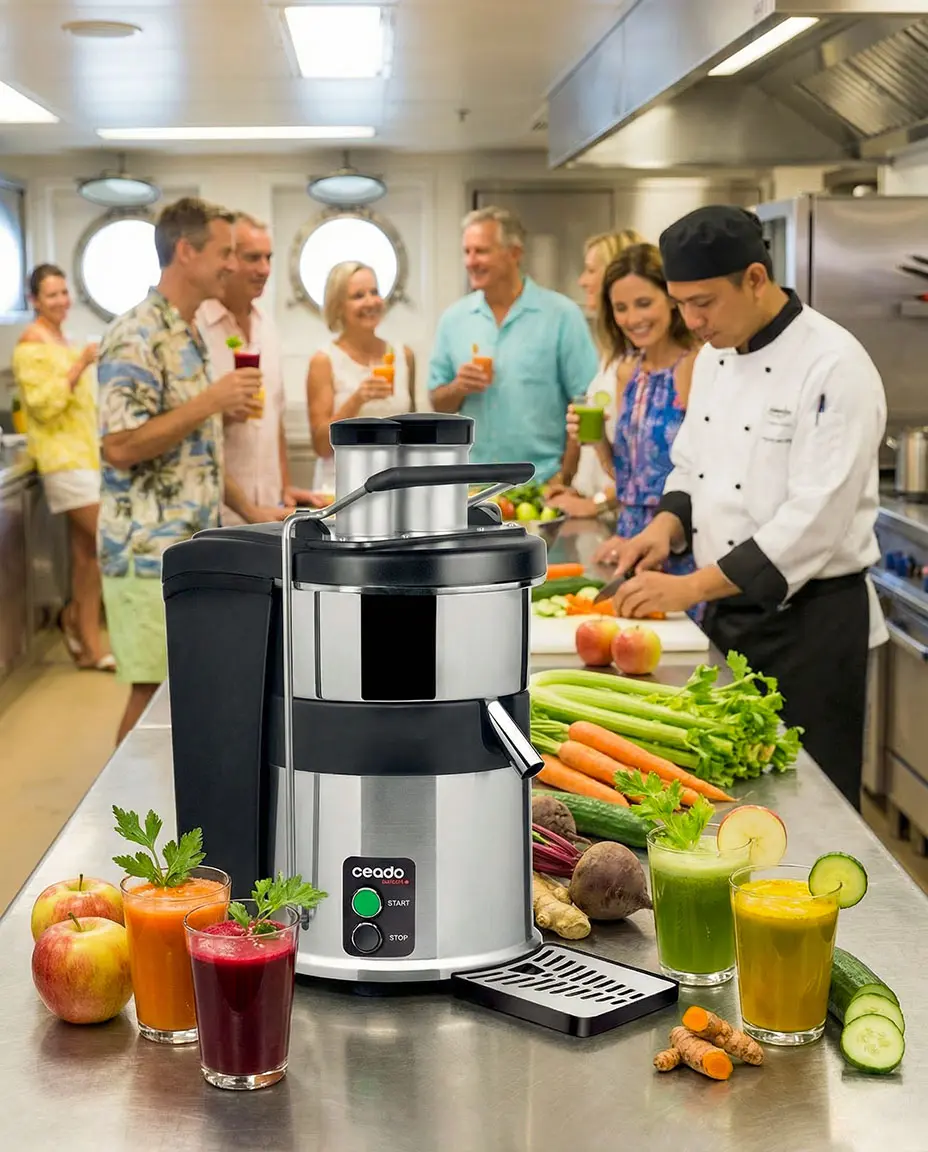
Meet the “make it real” engine: Ceado ES700
This is where the Ceado ES700 changes the equation. The Ceado ES700 is a commercial juice extractor designed to make fresh, on-demand juice operationally realistic during service.
Here are the facts that matter in a restaurant, because they tie directly to outcomes:
- The Ceado ES700 can produce up to a half gallon of juice in about a minute, supporting medium-high volume service.
- It’s the only brand described here with a double-feed chute designed for optimal extraction from most fruits and vegetables, helping reduce prep time.
- It includes H24 technology (a run time of 24 hours without overheating due to integrated thermal blocks).
- It features automatic pulp ejection and a “Pulp Retainer” that makes juice clearer and brighter, enhancing taste.
- It has magnetized parts that are easily removed for cleaning with no tools required.
- It’s designed with an interlock system and motor brake: lifting the safety locking bar stops moving parts with the engine brake, reducing waiting between basket cleanings.
- It’s described as the quietest juicer on the market, at 60 decibels.
- Certifications listed: NSF, CE, UL, ETL.
- Specifications listed: 3,600 rpm motor, 1.07 HP, 800 W; feed chutes 2″ & 3″; dimensions 11″W x 16″D x 20″H; net weight 43 lbs.
- Warranty listed: 1-year parts and labor. Handmade in Venice, Italy.
That’s not brochure trivia. Those are restaurant levers: speed, uptime, consistency, cleaning time, and guest experience. And they’re the reason the Ceado ES700 doesn’t just make juice, it makes a program possible.
Fresh juice vs bottled: the advantage guests can taste (and feel)
Here’s the core point, stated plainly: fresh on-demand juice is generally healthier than bottled because it retains more fragile nutrients and antioxidants, avoids many processing losses and additives, and lets you control sugar load and oxidation time.
The Ceado ES700 gives you a way to put that truth into practice during service, not just in marketing language.
Nutrient density and enzymes: “fruit to glass” without detours
Freshly extracted juice goes from fruit to glass with minimal processing. That matters because heat-sensitive vitamins like vitamin C and some B vitamins can be present at higher levels than in many bottled juices that have been pasteurized and stored. Fresh citrus juice, for example, consistently shows higher vitamin C and antioxidant content than shelf-stable versions after processing and storage.
The Ceado ES700 supports that “fruit to glass” promise because it’s built for speed and continuous use. When your fruit juice machine can keep up, you don’t need to pre-batch and hold juice longer than necessary. You press, pour, serve. You shorten the time window where nutrients and sensory quality start slipping.
Antioxidants and phytonutrients: the “freshness dividend”
 Polyphenols, flavonoids, and other phytonutrients degrade with exposure to heat, light, and oxygen factors involved in commercial bottling and long-term storage. Fresh juice delivers these compounds immediately. That immediate delivery is the dividend.
Using the Ceado ES700 as your daily fruit and veggie juicer turns “fresh” into a measurable operational behavior: you’re not serving juice that has lived through a long chain of time and handling. You’re serving it at its peak.
Minimal additives and processing: the ingredient list guests want
Most bottled juices (outside of some premium 100% products) may include preservatives, flavor packs, or added sugars to stabilize flavor and shelf life. Fresh on-demand juice from whole produce typically contains only natural fruit sugars and the inherent micronutrients, without chemical preservatives or artificial flavors.
This matters because diners can feel the difference between “clean” and “constructed.” When a guest orders healthy fresh juices, they’re often ordering a value statement. With the Ceado ES700, your “value statement” isn’t printed on a label. It’s visible in the produce you press.
Oxidation: the invisible clock you can actually control
Vitamin C and certain antioxidants start breaking down quickly once juice is exposed to air, especially if it’s not kept cold and sealed. Bottled juice is often weeks or months old, so even with good packaging it usually has somewhat lower levels of these fragile compounds compared with juice consumed immediately after extraction.
This is where the Ceado ES700 earns its place. Because it can deliver high output quickly, it helps you serve juice minutes after extraction. In restaurant terms, that’s how you beat the oxidation clock: not by wishing it away, but by designing service so juice doesn’t sit.
If you’ve been trying to run juice with equipment that can’t keep up, you’ve seen the pattern: pre-batching creeps in, holding times stretch, and “fresh” starts to feel like theater. The Ceado ES700 supports a different pattern: produce in, juice out, guest served fast enough that quality is protected.
Sugar load: shift from “sweet drink” to “smart drink”
Bottled juices frequently use blends and concentrates optimized for sweetness, leading to higher sugar per serving and less fiber or pulp than a thoughtfully made fresh juice. Fresh on-demand programs can design recipes with more vegetables, lower-sugar fruits, and optional pulp, moderating the glycemic load while still delivering flavor and hydration.
The Ceado ES700 doesn’t just make that possible, it makes it practical. With a capable juice extractor, you can engineer the menu around outcomes:
- Vegetable-forward blends that taste bright without relying on heavy fruit sweetness
- Smaller, premium-priced portions that deliver satisfaction without sugar overload
- Optional pulp retention choices depending on your concept and guest preference
This is where diners feel cared for. They don’t want a “juice” that turns into a crash. They want something that supports their day.
And this is where search phrases like vegetable juicers, best vegetable juicer, and best veggie juicer become relevant not as internet hype, but as the lived restaurant reality: you need equipment that can handle vegetables and still keep service moving. The Ceado ES700 is positioned as ideal for medium-high volume and designed to gently extract juice with a grating disc and mesh filter, including performance with leafy vegetables, while automatically ejecting pulp.
Cold press expectations vs real-world restaurant needs
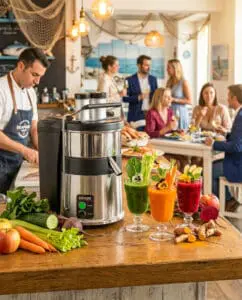 Let’s address the phrase guests bring into your dining room: “cold press.” Many people search for a juice cold press juicer because they associate “cold press” with freshness and quality. In a restaurant, the deeper goal isn’t winning a terminology contest, it’s delivering a drink that tastes fresh, feels clean, and aligns with wellness expectations.
The Ceado ES700 supports that guest expectation in the ways diners actually experience: brightness, clarity, and made-to-order immediacy. It also supports your reality: speed, uptime, and easier cleaning.
If you’ve ever tried to run a juice program that looks great on paper but collapses during service, you already know the principle: the “best” method is the one you can execute consistently under pressure.
The tech that makes the program stick
Restaurants don’t fail at juice because they don’t care. They fail because the system is fragile. The Ceado ES700 is designed to reduce fragility.
Speed that prevents service slowdowns
Up to a half gallon in about a minute changes the math. A fruit and veggie juicer that keeps pace means you’re not sacrificing ticket times to serve “healthy.”
Reduced prep via double-feed chute
The double-feed chute (2″ and 3″) helps reduce cutting and staging. Less prep means fewer labor minutes burned before you sell a single drink.
H24 technology for long shifts
H24 technology supports a run time of 24 hours without overheating due to integrated thermal blocks. Translation: fewer interruptions and less anxiety during peak periods.
Cleaning and changeover that staff will actually do
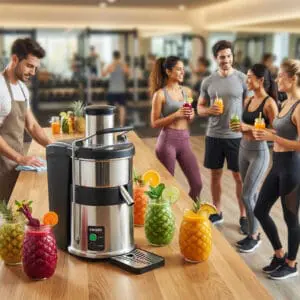 Magnetized parts remove easily, no tools required. Automatic pulp ejection keeps the workflow moving. The practical tip of ordering an extra basket assembly supports fast swaps: one basket washing while the other runs, and easier switching between green drinks and beets.
This is the difference between “we tried juice” and “juice is now part of who we are.”
Quiet operation that fits front-of-house realities
At about 60 decibels, the Ceado ES700 is described as the quietest juicer on the market. That can matter in open kitchens, beverage stations near guests, or concepts where noise is part of the brand experience.
Positioning: how to talk about it without sounding like a health lecture
If you’re going to win with healthy fresh juices, the language matters. Guests don’t want a science lesson; they want confidence.
Here are frames that fit a restaurant menu and staff talk track:
- Made to order, never shelf-stored.
- No preservatives, no flavor packs, no added sugar, just fruit and veg.
- A functional choice (energy, immunity, recovery), not “another sweet drink.”
The Ceado ES700 makes these claims believable because the behavior matches the promise. You’re not building a story on top of a bottle. You’re building it on produce and speed.
Fewer headaches, more yeses
Juice stops being a compromise you hide in the cooler and becomes a confident, profitable “yes” you can deliver on demand. With the Ceado ES700 on your line, your team isn’t fumbling with bottles, second-guessing ingredients, or apologizing for sweetness, fresh juice becomes as repeatable as any other menu item.
Orders move faster because prep is simpler and output is quick. Mistakes drop because you’re not stocking a maze of SKUs or rotating dates. Stress drops because the program runs cleaner and changeovers are easier. And the payoff shows up where it matters: in the guest’s reaction and your numbers. The juice tastes brighter, looks fresher, and feels intentional, because it is.
If you want a simple metaphor: the Ceado ES700 turns juice from “special handling” into a standard station.
A note for buyers who love specs (and why they matter)
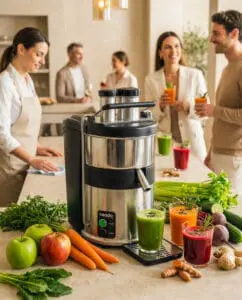 People searching for a juicer food centrifuge are often searching for capacity. The Ceado ES700 is listed at 3,600 rpm with a 1.07 HP motor (800 W), and its design includes a stainless steel bowl and juicer basket. It’s also listed as weighing 43 lbs net and measuring 11″W x 16″D x 20″H; useful facts when you’re planning counter space and workflow.
It’s also globally NSF and UL approved (and listed as NSF, CE, UL, ETL certified), which supports operational and compliance considerations.
These details matter because “juice” isn’t a concept; it’s a station. And stations need to fit.
Own the moment you serve
Bottled juice trades freshness for shelf life and in a restaurant, that trade is getting harder to justify. The Ceado ES700 gives you a way to serve healthy fresh juices that taste like they were meant to be served: made to order, fast, and under your control. When you manage oxidation time, ingredients, and sweetness in real time, you’re not just pouring a drink, you’re protecting trust and building a beverage lane that performs. Speed is a strategy: the quicker you go from produce to glass, the more value stays in the juice and the more credibility stays with your brand.
Want to see what this looks like in your operation?
Request a quote or a quick demo of the Ceado ES700 and we’ll map a simple juice menu that fits your volume and labor.
Contact Us: 1-800-627-2886 for a no-pressure, 10-minute consult.
Why Thousands Call Juicernet the Best Partner in the Juice Business
Soup-to-Nuts Support
Nationwide Tech Network—if it breaks, we’re there in hours, not weeks.
One-Year Warranty (Minimum)
Every Juicernet machine ships with 1-year parts warranty.